The Rock-Cut Churches of Göreme and the Art-Filled Streets of Avanos
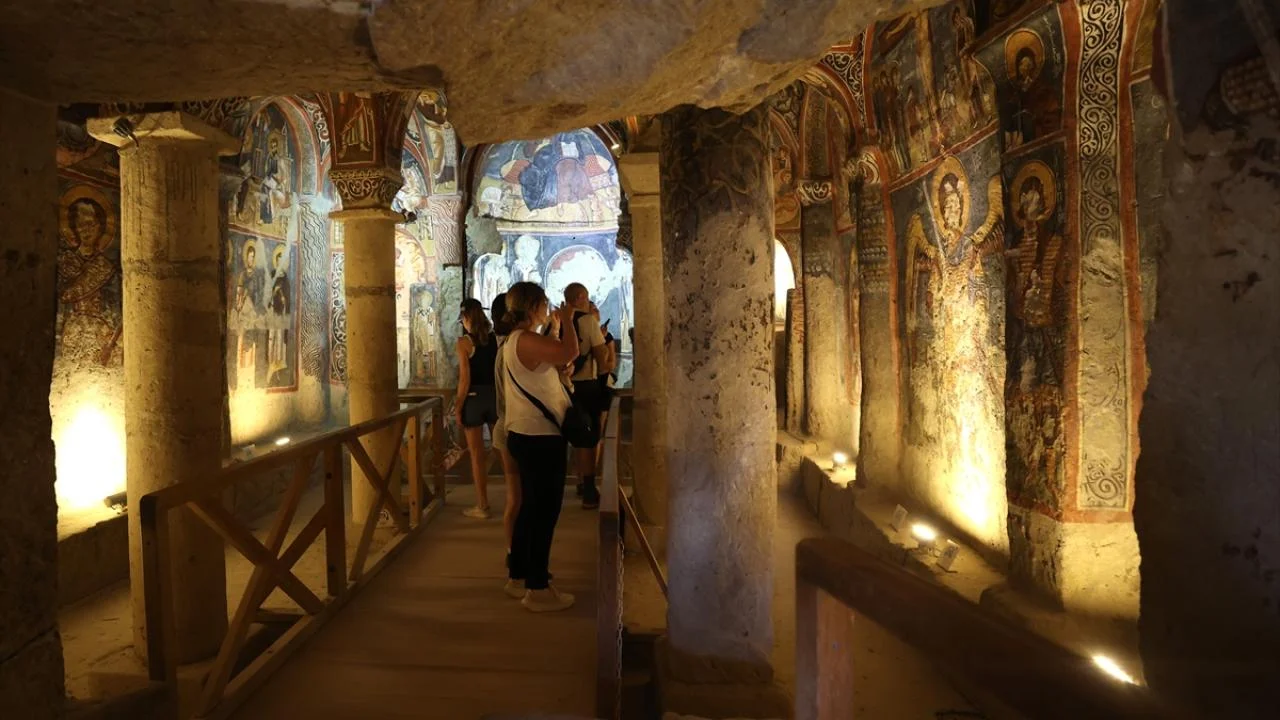
Göreme, with its ancient rock-carved churches, takes you on a journey through time, while Avanos tells a more earthly story—one shaped by the warmth of clay and human creativity. Visiting these two towns in winter offers not only peace and tranquility but also a deeper connection with the land and its history.
Göreme: Faith and Patience Carved in Stone
Göreme is one of Cappadocia’s most remarkable treasures. Listed as a UNESCO World Heritage Site since 1985, the Göreme Open-Air Museum is a unique open-air archive of early Christian life in Anatolia. Between the 10th and 12th centuries, monks carved churches, chapels, and monasteries into soft volcanic rock, creating a sacred landscape that still feels alive today.
The most famous churches — Tokalı (Buckle) Church, Karanlık (Dark) Church, Elmalı (Apple) Church, and St. Barbara’s Chapel — each tell a different story.
The vivid frescoes in Tokalı Church depict scenes from the Bible with astonishing detail, while the geometric patterns of Elmalı Church reflect Byzantine influence. The Dark Church, protected from sunlight for centuries, has preserved its colors so well that the frescoes seem freshly painted. Standing before these walls, you can almost feel the quiet devotion of those who once painted them.
Göreme in Winter: Silence, Snow, and History
Göreme in winter has a magic all its own.
Snow gently settles on the fairy chimneys, wrapping the valleys in silence. Walking among them, you feel as if time itself has slowed down. The air is crisp, the light softer, and the sense of solitude gives you space to truly absorb the landscape.
Unlike the crowded summer months, winter lets you explore each church at your own pace — to pause, breathe, and listen to the whispers of history echoing through the stone walls.
Photographers find Göreme especially captivating in winter.
The Zemi, Rose, and Red Valleys offer otherworldly views — white snow against red cliffs, golden light reflecting off icy rock. At sunset, the colors shift from amber to deep crimson, painting the valleys in warmth even as the air stays cold.
Avanos: The Town Where Clay Becomes Art
A short 20-minute drive from Göreme lies Avanos, the artistic heart of Cappadocia.
For thousands of years, this town has been known for its pottery, crafted from the red clay of the Kızılırmak River. The art of pottery here is not just a craft — it’s a tradition, a way of life passed down through generations. Every turn of the wheel, every curve of a handmade pot carries the rhythm of time.
Walking through Avanos, you’ll hear the hum of pottery wheels, see hands shaping clay, and smell the faint scent of earth and fire. Many workshops welcome visitors, offering a chance to try the craft yourself. Sitting at a potter’s wheel, molding the red clay into shape, connects you directly to a history that stretches back to the Hittite civilization.
The Streets of Avanos: Warmth Amid Silence
Avanos in winter is quiet and poetic.
Its narrow cobblestone streets, lined with stone houses, lead you down toward the river. The air smells of wood smoke, and the windows of workshops glow with soft yellow light. On cold evenings, you can hear gentle music from artisan shops, blending with the sound of the Kızılırmak flowing slowly through the town.
Crossing the suspension bridge over the river, you might see mist rising from the water, wrapping the town in a dreamy haze. It’s the kind of beauty that feels real and unpretentious — simple, yet deeply soulful.
The Invisible Connection Between Göreme and Avanos
Between Göreme and Avanos runs a quiet, invisible thread — a cultural connection shaped by stone and soil.
Göreme represents the spiritual side of Cappadocia, carved by faith and patience. Avanos represents the earthly side, molded by creativity and craftsmanship. One was born of devotion, the other of labor — together, they tell the story of a region where art and belief coexist in harmony.
A day spent exploring both towns is like reading two chapters of the same ancient book — different, yet inseparable.
Traveling Through Cappadocia in Winter
Traveling in Cappadocia during winter offers a kind of intimacy that the busy seasons can’t.
You can walk through Göreme’s snow-covered valleys in the morning and warm up with a cup of tea in an Avanos pottery studio in the afternoon. The pace is slower, the air clearer, and every detail feels more personal.
Hotels are quieter, prices are lower, and the entire region feels as though it’s sharing its secrets only with you.
Watching hot air balloons rise over snowy Göreme at sunrise, then crafting your own clay pot in Avanos before sunset — this is the essence of winter in Cappadocia: calm, creative, and unforgettable.
A Journey Through Time and Art
Göreme and Avanos are not just places to visit; they are experiences to be lived.
In Göreme, the stones speak; in Avanos, the soil breathes.
One preserves faith, the other celebrates craftsmanship. Together, they tell a story that has been unfolding for centuries — one of human perseverance, imagination, and harmony with nature.
If your path ever leads you to Cappadocia, walk through Göreme’s rock-cut churches and feel the pulse of history beneath your feet. Then, let Avanos welcome you with its warm workshops and kind-hearted artisans.
Because here, between stone and clay, you don’t just witness history — you become part of it.